How to Photograph Horse Silhouettes With Cleaner Shapes at Sunset
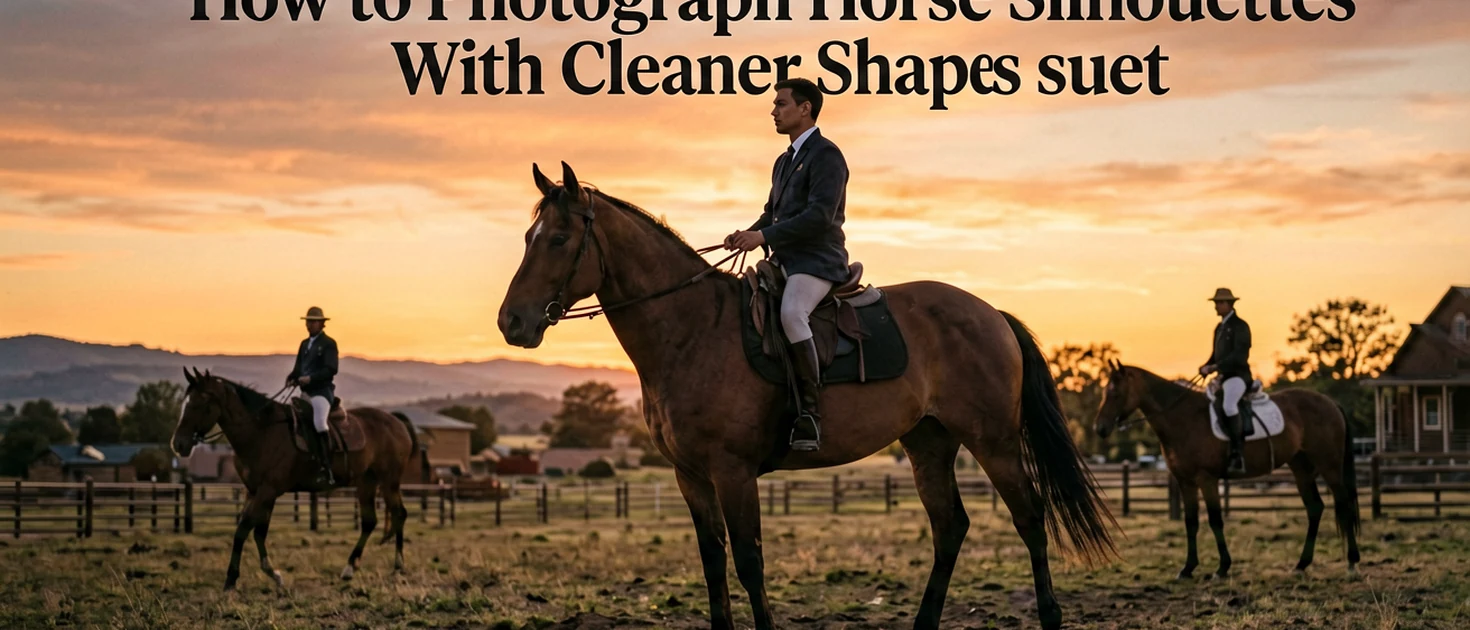
A silhouette reads well when the horse, rider or handler separates cleanly from the background and the photographer positions the frame before the sun drops into clutter.
Quick takeaways
- A clean silhouette starts with a background that keeps legs, reins and profiles separated instead of letting them melt into brush, fences or dark trees.
- Expose for the bright sky and let the subject fall dark on purpose rather than trying to protect coat detail and silhouette shape at the same time.
- Low camera position often helps the horse clear the horizon line so the legs and neck stay readable.
- The strongest frames come from simple poses, clear spacing and a short burst when the horse or rider reaches a clean outline.
Equine Silhouette Photography
Hey y'all!! Today I am showing y'all how I take mysilhouette picturesof thehorses. I'm definitely nowhere near being a ...
Also useful if you are comparing clips around: How to Photograph Horse Silhouettes With Cleaner Shapes at Sunset
- Channel: Growing Hannah's Homestead
Pick the background before you worry about the pose
Most silhouette problems start with the background, not with the camera. If the horizon cuts through the horse's knees, a fence slices across the neck, or dark brush sits behind the rider, the outline loses its punch before the shutter ever clicks.
A better approach is to plant yourself first and look for a patch of open sky where the subject can stand above the clutter. Small changes in position make a big difference, especially when the horse needs enough space around the ears, nose, reins and lower legs to stay readable.
| Scene choice | What usually goes wrong | Cleaner alternative |
|---|---|---|
| Flat ground with busy brush | Legs and tail disappear into dark texture. | Move lower or shift until the horse clears the horizon against open sky. |
| Rider and handler too close together | Bodies merge into one shape with no clear story. | Ask for a half-step of separation so each outline reads on its own. |
| Trees behind the head | Ears and profile lose their edge. | Reposition so the head is framed against the brightest clean area. |
| Sun dropped too low behind clutter | Highlights blow out while the shape gets messy. | Start a few minutes earlier while the sky still gives you cleaner placement options. |
Good horse photography almost always gets easier when the plan gets simpler.
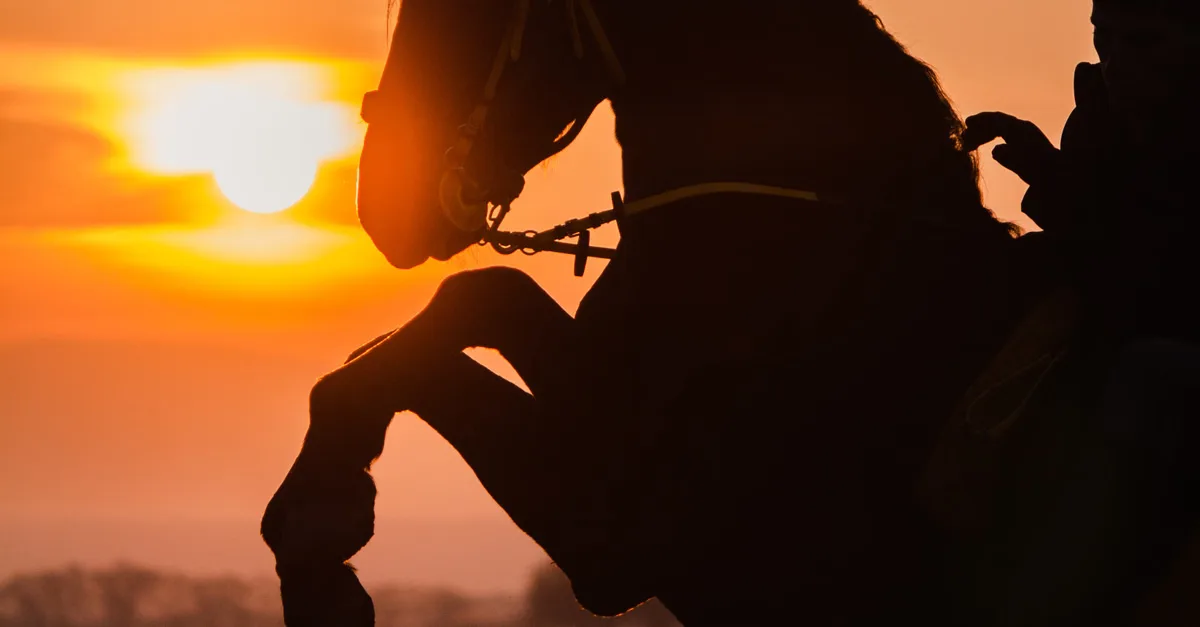
Treat shape as the whole story because color and coat detail will not carry the frame
Silhouettes work because the outline tells the story. Once the horse goes dark, the viewer is reading posture, profile, rein line, mane movement and the space between body parts rather than facial detail or coat texture.
That is why simple poses usually beat complicated ones. A straight neck, one readable front leg, a rider profile turned slightly sideways, or a handler who is not pressed against the shoulder will often create a stronger image than a pose with more action but less separation.
- Ask riders to turn the face slightly so the nose and chin keep a visible profile.
- Watch for legs stacking together and wait for a step that opens them up.
- Keep extra people, lead ropes and background clutter out of the silhouette unless they help the story.
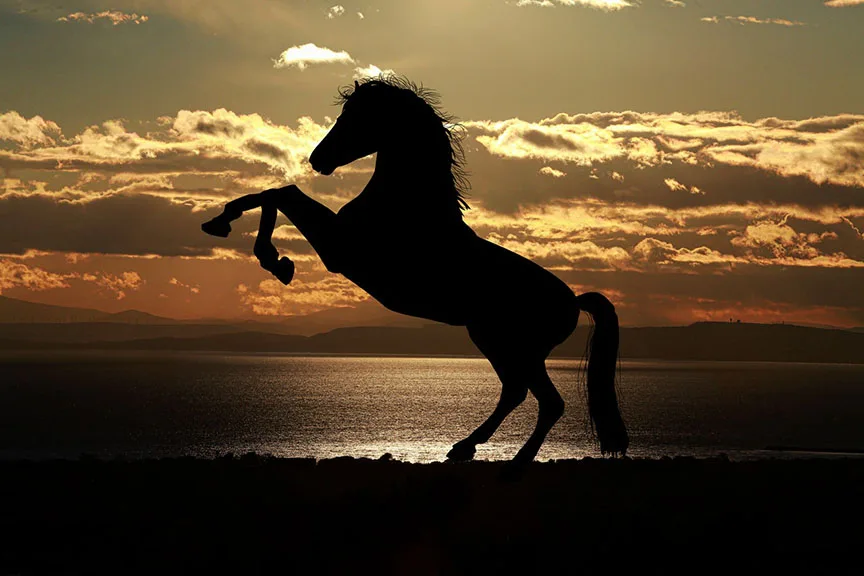
Expose for the sky and let the subject stay dark on purpose
A silhouette is one of the few times when losing subject detail is the point. Meter for the bright part of the scene, hold the color and brightness in the sky, and allow the horse or rider to drop into shadow instead of fighting to rescue both at once.
Manual control usually makes this easier because the light changes quickly near sunset. A smaller aperture can keep the edges crisp, while a fast shutter helps if the horse is moving or if you want a cleaner instant during a walk, trot or head turn.
- Start by metering the sky, not the horse.
- Use a shutter speed that still respects movement if the subject is not fully still.
- Keep ISO as low as the scene allows so the dark areas stay smoother if you make light edits later.
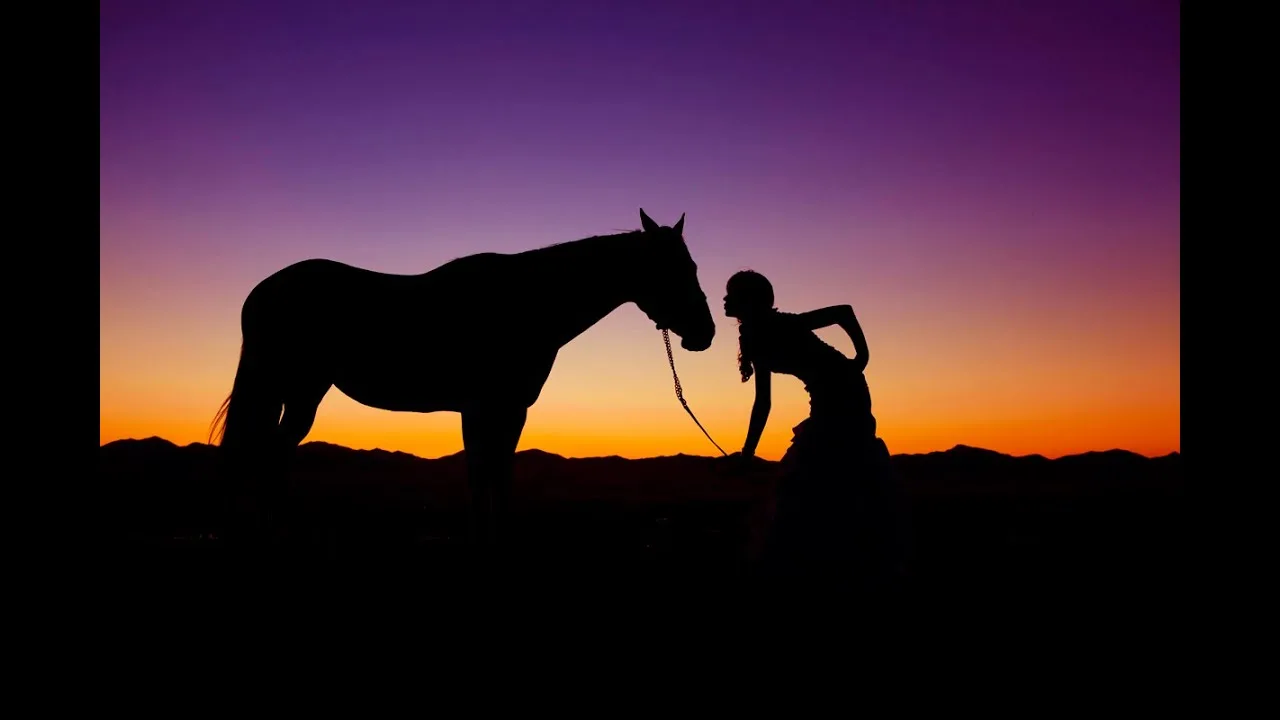
Use camera height and timing to separate the horse from the horizon
A silhouette often improves the moment the camera drops lower. That lower angle can lift the horse above the horizon line, reveal more of the legs and create a cleaner break between the subject and the land behind it.
Timing matters just as much. If the horse is walking or the rider is adjusting position, hold a short burst through the movement and look for the frame where the outline opens up. One slightly cleaner step can turn a muddy frame into the image you keep.
- Crouch or shoot from a lower patch of ground when the horizon is cutting through the body.
- Wait for a pause or for one stride where the legs separate instead of overlapping.
- Start the silhouette sequence before the best color fades so you have room to refine position.
Edit lightly so the silhouette stays graphic instead of crunchy
Silhouette files usually need less rescue and more cleanup. A gentle contrast bump, stronger blacks and a small color adjustment in the sky often do enough. If the edit gets too aggressive, banding, halos or brittle edges start stealing attention from the shape itself.
The goal is a frame that looks intentional, not overworked. When the outline is clear and the sky still carries color, the image already has the drama it needs.
- Deepen blacks only until the outline feels solid and clean.
- Check the edges around ears, mane and reins before exporting.
- Keep saturation believable so the sky supports the silhouette instead of overpowering it.
Frequently asked questions
What is the biggest reason a horse silhouette looks messy?
Usually the background is too busy or the horizon cuts through the horse in the wrong place. Clean placement matters more than dramatic editing.
Should I expose for the horse or for the sunset sky?
Expose for the sky. A silhouette works because the subject goes dark on purpose while the sky keeps the color and brightness that shape the scene.
Does camera height really change the shot that much?
Yes. Dropping lower often lifts the horse above the horizon and makes the legs, neck and head profile much easier to read.
Do silhouettes need heavy editing to look dramatic?
No. When the positioning and exposure are right, a light contrast and color pass is usually enough.